Culture Through the Eyes of Communities: Tereny Presents an Anthropological Study of Poltava Region
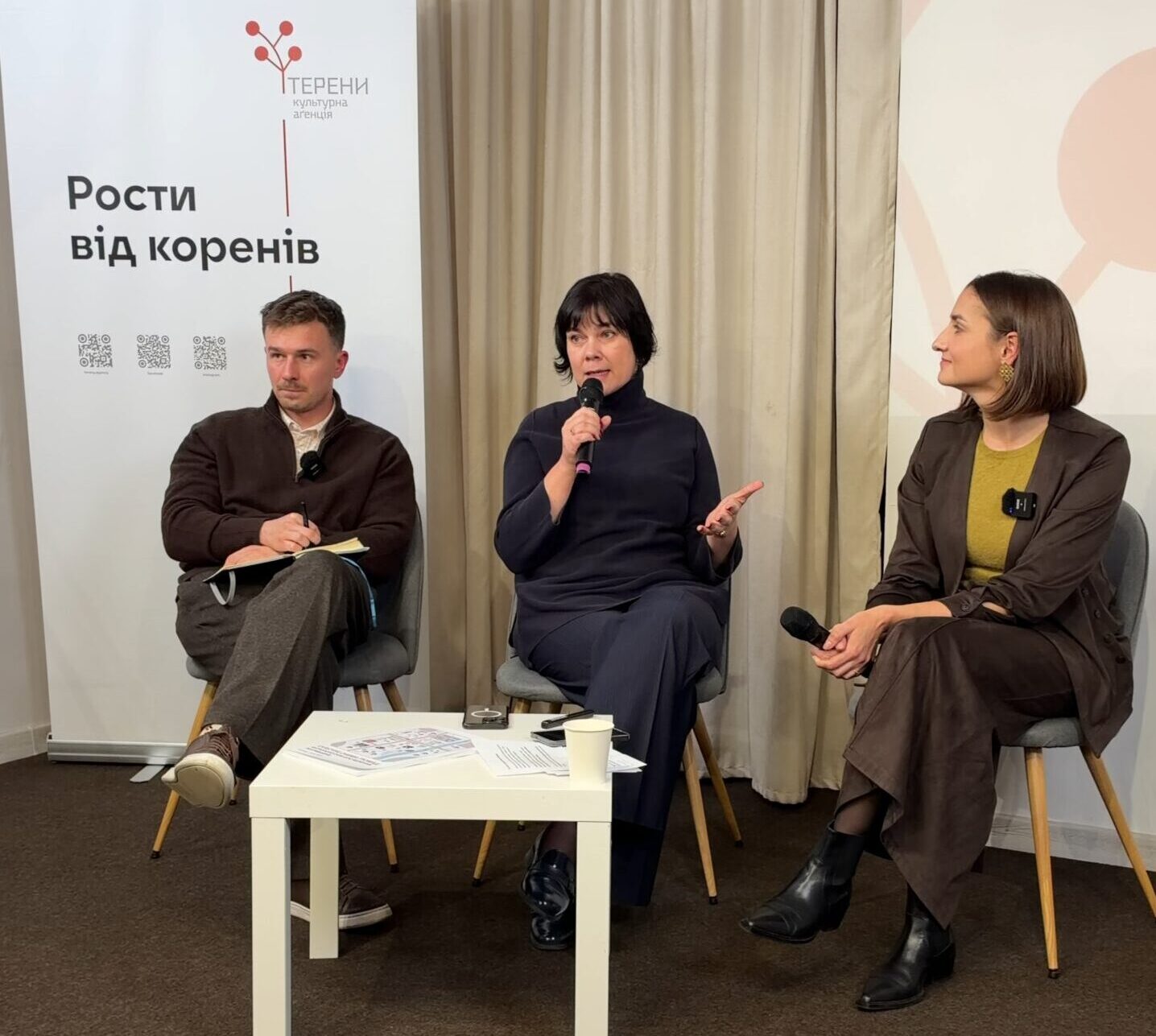
On 26 October, cultural agency Tereny presented the findings of Culture Through the Eyes of Communities: An Anthropological Study of the Poltava Region in Kyiv. Commissioned by Tereny, the study was conducted with support from the Mnozhyna Foundation through its Culture Program.
The discussion brought together the study’s co-authors, Oleksii Moskalenko and Tina Polek; Tereny director Tetiana Teren; First Deputy Minister of Culture of Ukraine Ivan Verbytskyi; and Galyna Gryhorenko, head of the Mnozhyna Foundation’s Culture Program.
In April and May 2026, the research team worked in communities across the Poltava region, conducting in-depth interviews and observing local cultural life. This anthropological approach looked beyond the condition of cultural infrastructure to explore how residents understand culture, what they do together and what opportunities are missing.
Key findings
- A broader understanding of culture. In many communities, culture is still associated mainly with formal events. As a result, people may overlook the cultural practices woven into everyday life and feel that nothing is happening in their town or village. During wartime, this is compounded by a sense that joy is somehow impermissible, even as people continue to seek opportunities to come together.
- Local needs over an “export” model. Cultural work should respond to residents’ changing needs rather than rely on an outdated model built around a handful of historical figures. Formal institutions often focus on reporting, while active residents and internally displaced people are among those driving change.
- A shortage of welcoming spaces. Communities need more comfortable, modern venues with flexible opening hours. Existing cultural facilities are often closed when people are free to use them, pushing cultural life into social media and local online communities.
- Financial and institutional sustainability. The assumption that cultural services should be free can limit the sector’s development. Building sustainable funding models and attracting investment from local businesses remain significant challenges.
- Better communication. Limited social media capacity and advertising budgets can leave cultural events reaching only a small circle of people who are already engaged. More effective use of digital tools and broader outreach could help bring local cultural life to a wider audience.
The study looks at culture through residents’ own experiences: where they meet, what they do together, and what spaces and opportunities they need. This makes it possible to see culture not only in the work of institutions, but also in the everyday life of communities.
For the Mnozhyna Foundation’s Culture Program, this perspective matters. The Foundation sees culture as a way of life and supports work that helps communities rethink the role of cultural institutions, build connections and move beyond inherited Soviet-era models. This approach also reflects the Foundation’s mission: to help people become authors of their own lives, feel connected to the places where they live and have a say in their future.
Download the full study from the Tereny cultural agency website.
Related news