Free To Be Yourself: How Buhurt Sich Helps War Veterans Recover Through Sport and Community
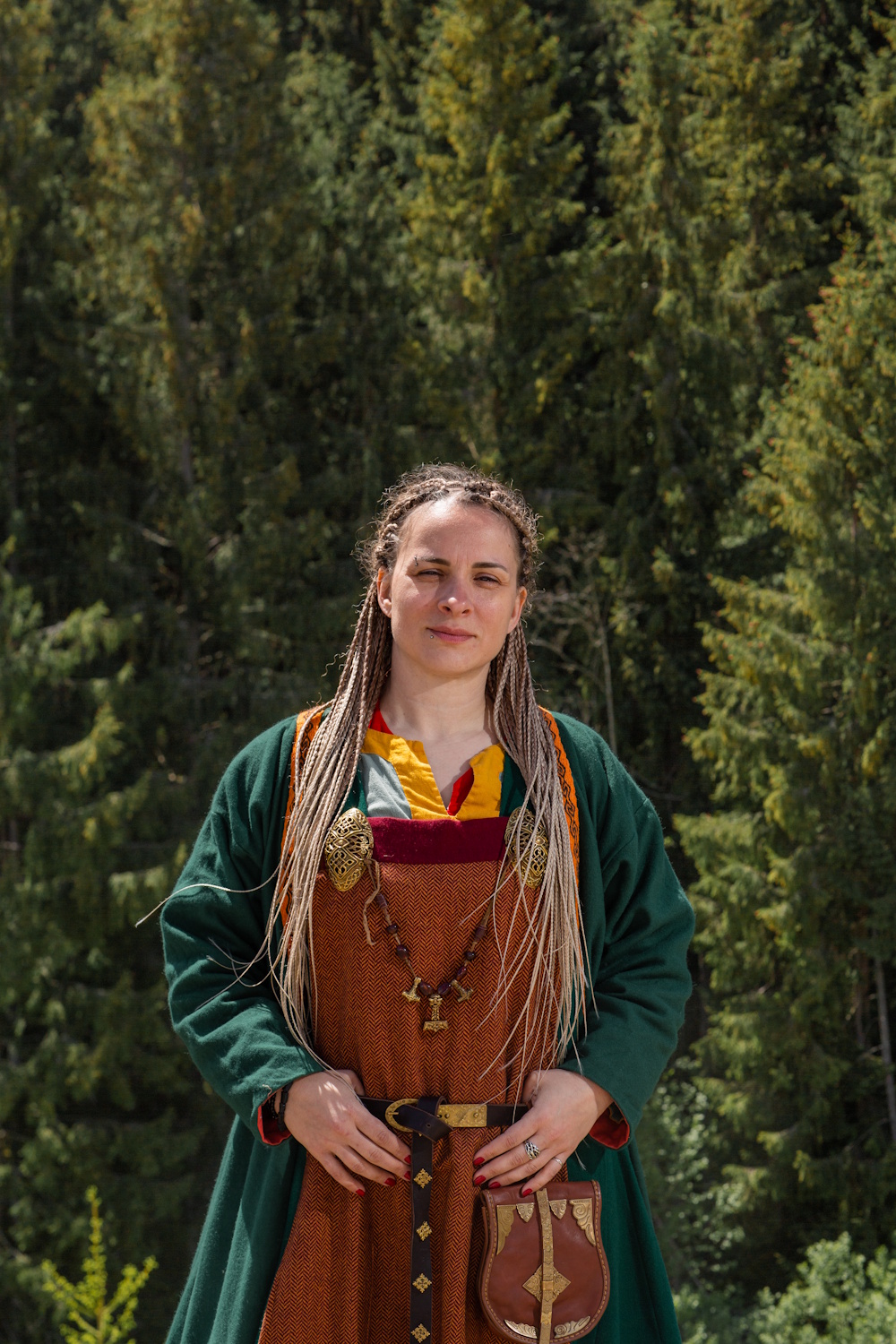
“You’re free to come, free to leave. Free to try, free to make mistakes, free to be yourself.” That’s how Olena Krechet, Buhurt Sich’s founder and project lead, describes the approach to training.
Buhurt Sich began as a volunteer chat for coaches. Today, it has its own coaching school, shared safety standards and local groups in several Ukrainian cities. We look at how the training supports veterans — and how a grassroots initiative has grown into a model that other cities can adopt.
Some people arrive at Buhurt Sich an hour or two before training begins. While the group gathers, they chat or simply spend time together. Those who are unable to train because of their health can still stay nearby — to help the coach, time the session or watch.
Over time, a community of veterans has grown around the training. Here, they can gradually return to physical activity alongside people who understand what they have been through without needing them to explain.
Buhurt Sich is a partner of the Mnozhyna Foundation’s Resilience Program. The team is developing adaptive sport for veterans and opening local groups in cities across Ukraine. Its Kharkiv group opened with the Foundation’s support.
More than sport
Buhurt is a team-based, full-contact combat sport fought in protective armour and rooted in medieval fighting traditions. Participants must control their strength and movements, stay aware of their partner or opponent, and work in coordination with their team. Training can help release tension, reconnect with the body and gradually rebuild confidence in one’s physical abilities.
In 2023, the NGO Association of Buhurt Sport in Ukraine began working systematically with veterans at Lisova Polyana, a mental health and rehabilitation centre for veterans. There, the coaches learned about the biopsychosocial model and began working alongside psychologists, rehabilitation specialists and case managers. Since then, training has been tailored to participants’ physical condition, psychological wellbeing and social circumstances.
At first, the team saw training mainly as a way to support physical recovery and relieve tension. But participants’ feedback showed that its effects went beyond sport. Olena Krechet, the project’s founder and lead, recalls:
“Most of the feedback wasn’t about sport or improvements in fitness and stamina. People were saying they had started eating and sleeping again.”
The coaches’ training was expanded to include courses in rehabilitation and psychological preparation. They learn to provide psychological first aid, recognise the effects of trauma and tailor the level of exertion to avoid causing harm..
“You’re free to come, free to leave”
A newcomer’s first training begins with a brief check-in. The coach asks how they’re feeling, physically and emotionally, and tailors the session accordingly. Newcomers start with a gentle warm-up, get a safety briefing and familiarise themselves with the equipment. Only then do they move on to light, controlled sparring.
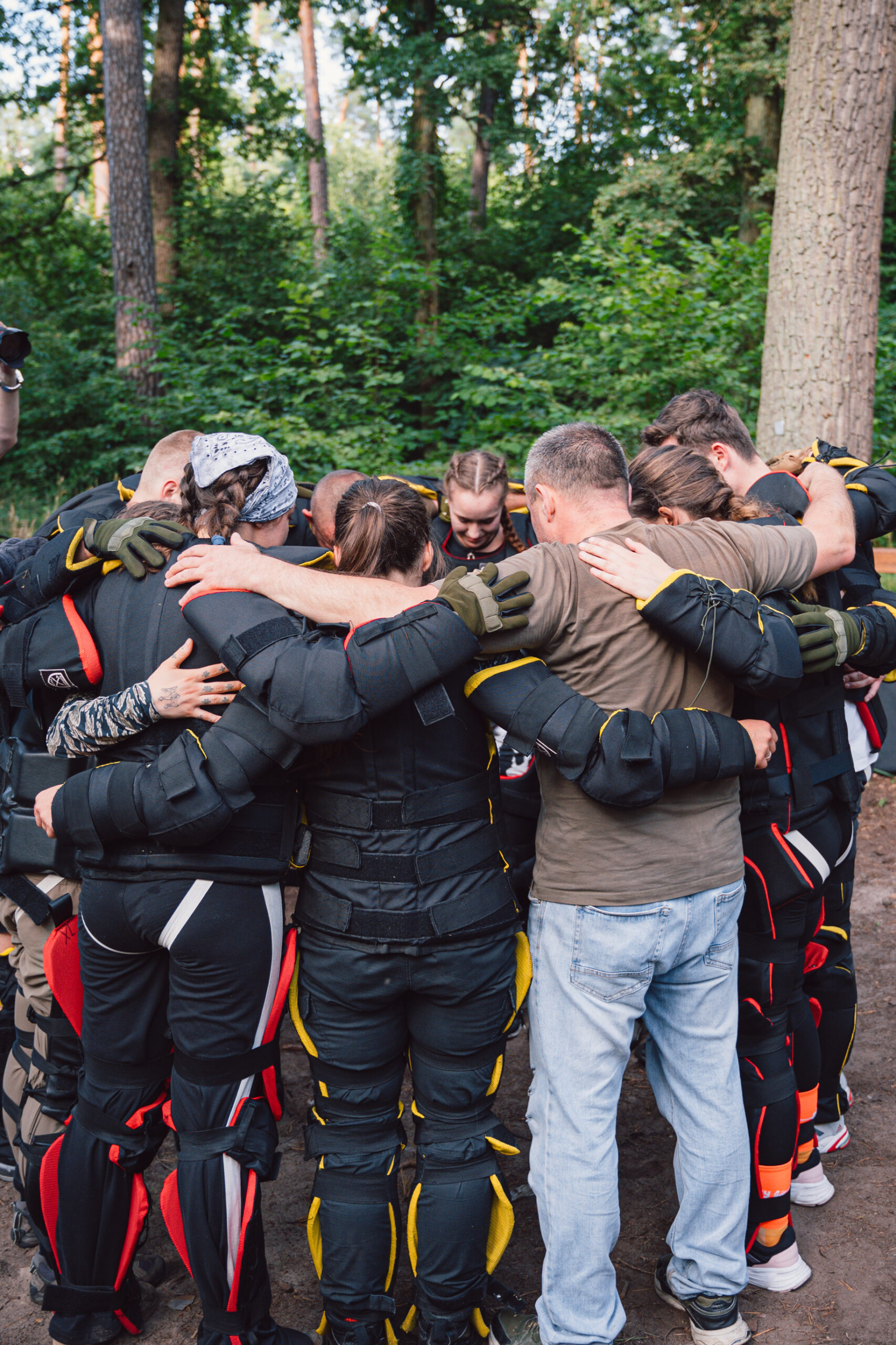
The training ends with an exercise the team calls “the jellyfish”. Participants hug, take a moment to ground themselves and remind one another that they’re still friends once sparring is over.
Whether they train regularly or drop in now and then is up to each participant. They can give it a try and choose not to come back. There’s no pressure to continue, and no one has to explain their choice.
“You’re free to come, free to leave. Free to try, free to make mistakes, free to be yourself,” Olena says.
From a coaches’ chat to a coaching school
Buhurt Sich began as a volunteer initiative, with a small chat for coaches. As the community grew, the team set out to build on what it had learned, train new coaches and establish shared standards for quality and safety.
That led to the creation of the Buhurt Coaches School. Its curriculum combines medieval combat training, psychological preparation and the basics of running a local group. Coaches learn to lead a group, provide psychological first aid, obtain informed consent and handle personal data responsibly.
Learning continues after graduation. In peer consultation groups, coaches discuss challenging situations with psychologists, receive professional guidance and reflect on their own experience.
The school’s first graduates began coaching in Kharkiv, Zviahel and Ivano-Frankivsk. After the next course, groups opened in Odesa and Rivne. In each city, veterans gain access to more than training: they have a trained coach, shared safety standards and ongoing support from psychologists through peer consultation groups.

History as our roots
Buhurt Sich’s medieval roots mean more than armour and spectacle. At training sessions and gatherings, participants explore Ukrainian history, military traditions and cultural heritage.
Olena says she began to think differently about the importance of history when she saw how many people from the buhurt community had gone to defend Ukraine:
“Knowing your history gives you deep roots. They help you withstand any storm and remember what you are defending: your home, your country.”
Returning to civilian life can raise questions about identity. Buhurt Sich helps veterans hold on to this part of their experience and find a place for it in their lives as civilians.
Taking Responsibility for Yourself
Reflecting on what it means to be the author of your life, Olena talks about the Soviet experience of older generations and recalls her grandmother saying, “We’re just ordinary people.” She says the Soviet Union taught people to lose their sense of agency:
“The Soviet Union taught us to give up our sense of authorship and agency, because people are easier to control that way.”

By contrast, she says, a responsible life begins with taking responsibility for yourself:
“A person must first take responsibility for themselves, act with agency and be able to manage their own lives.”
For veterans, this can be harder because of injuries, treatment and psychological challenges. When the effects of trauma are still acute, treatment comes first. As they recover, they may choose to share what has helped them.
Stepping out of a role
Taras Kovalyk, head of the Mnozhyna Foundation’s Resilience Program, has also taken part in the training. For him, adaptive sport offers a chance to step away from familiar roles for a while and simply play.
“Adaptive sport gives you a chance to step out of the roles of veteran, father, defender and all the others, and simply play. To be in the moment, to spar, to feel a little more like yourself. To be an athlete, or just take part in a training session. It helps me build confidence in myself and my body. Through sparring and connecting with others, I gradually find my way back to life,” Taras says.
The Resilience Program helps people integrate their experience of war into civilian life while retaining their capacity to act. Buhurt Sich puts this into practice by creating a community where veterans can recover at their own pace without having to explain what they have been through.
The Mnozhyna Foundation supports the growth of Buhurt Sich’s local groups, so veterans in more cities can find a community like this and have more opportunities to become authors of their own lives.
Photo: Buhurt Sich